
GROWING GUIDE - CYMBIDIUMS

Page Views
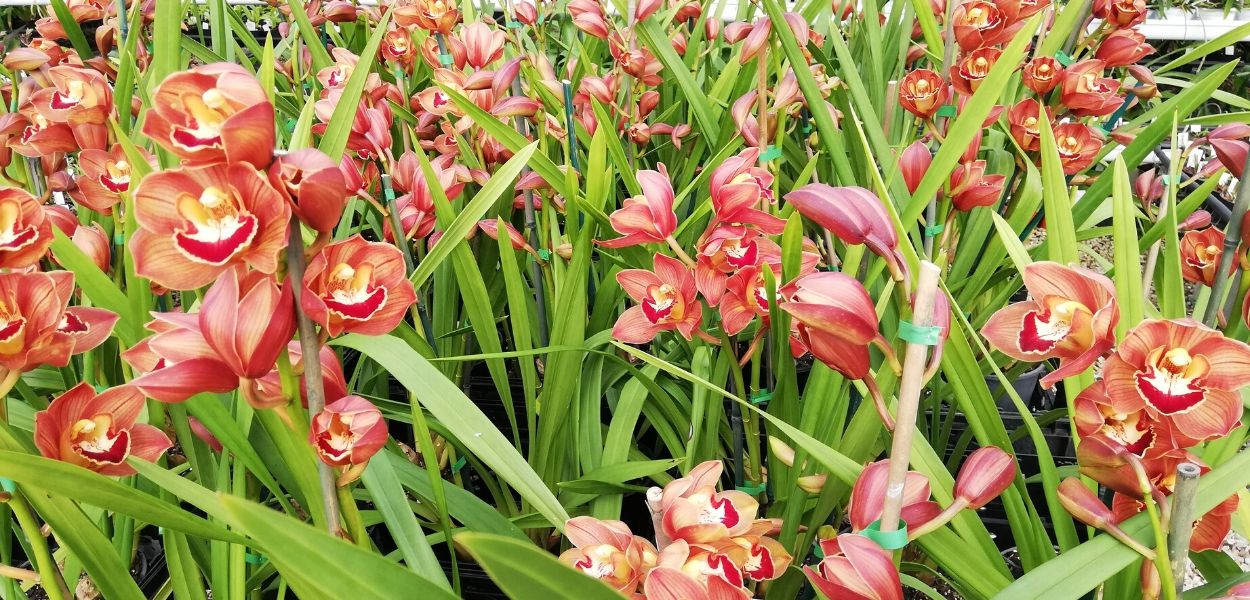
8695There are various types of cymbidiums: heat tolerant, intermediate, cool growing Cymbidium flowers come in different sizes:- Standards and Miniatures.
Miniatures are often recommended as many are more tolerant of heat. Cymbidiums tend to flower in the cooler months of the year.
FLOWERS:
Flowering season is generally in the cooler months of the year. As rain and wind may damage your blooms, we advise that plants are placed under the roof before the first flowers open. Staking the flower spikes early will help protect your flowers.
REPOTTING
Cymbidiums should be planted out (if necessary) once they have finished flowering. Once the blooms have dropped, one should cut off the spike. A suitable pot then needs to be selected – take care in not selecting too large a pot, allow enough space for 2 – 3 years additional growth. Prepare the new pot by placing a small amount of Orchid potting mix in the base of the pot. Remove the entire plant from the old pot but tapping the side of the existing pot to loosen the plant. Carefully lift the plant out of the pot (roots and all!) and then place it into the new pot. Carefully fill around the side of the plant and roots with orchid potting mix. Press the mix firmly in place and water well.
We sell bags of readymade Orchid potting mix.
LIGHT:
Cymbidiums should be grown under 50 – 60% shade cloth during the summer months. Morning and late afternoon sunlight are adequate however plants should be protected against the hot early afternoon sun as the leaves could very well burn. Should the cymbidium not receive enough light then it may not flower. A light green leaf with just a hint of yellow indicates that the maximum amount of sun is being received and dark green leaves indicate that there is not enough sun.
FEEDING AND WATERING:
Cymbidiums should receive water at least once a week, however, this can vary from area to area, depending on weather conditions. It’s advisable to water plants in the morning and allow them to drain freely. Do not water in the heat of the day as this may cause shoots to rot.
From September to December it’s recommended to include a high nitrogen-based fertilizer/ feed in every second watering. We recommend Starke Ayres ‘Growing Orchids’
For the period of January – March, one would then swop over to a flowering feed, for example, Starke Ayres ‘Flowering Orchids’. One may also use organic fertilisers such as Sea Grow and Nitrosol in alternative watering.
A flat teaspoon of dolomitic lime per pot, once a year is beneficial.
PESTS
Snails and ants love cymbidiums. Remember to place some snail bait down to avoid snails from eating the young buds and new root tips. We use Jeyes Fluid to help discourage ants
About Eikenhoff Orchid nursery in South Africa
The nursery specialises in exotic orchid plants and is co-owned by Debra and Pierre Martheze. We regularly select plants of superior breeding and cultivate and breed our own varieties as well as import plants from all over the world. We have large variety of Ansellia, Cymbidiums, Miltoniopsis, Oncidium Alliance and many other orchid varieties. Read more
Facebook LikeBox
Orchid Gallery



Contact Us
Address: Eikenhoff Farm, Portion 2 of Farm 970
Stanford, Western Cape
Country: South Africa
Mobile Debra: +27 (0)76 292 5267
Mobile Pierre: +27 (0)84 038 7055
E-Mail: admin@eikenhoff.com
------------------


